





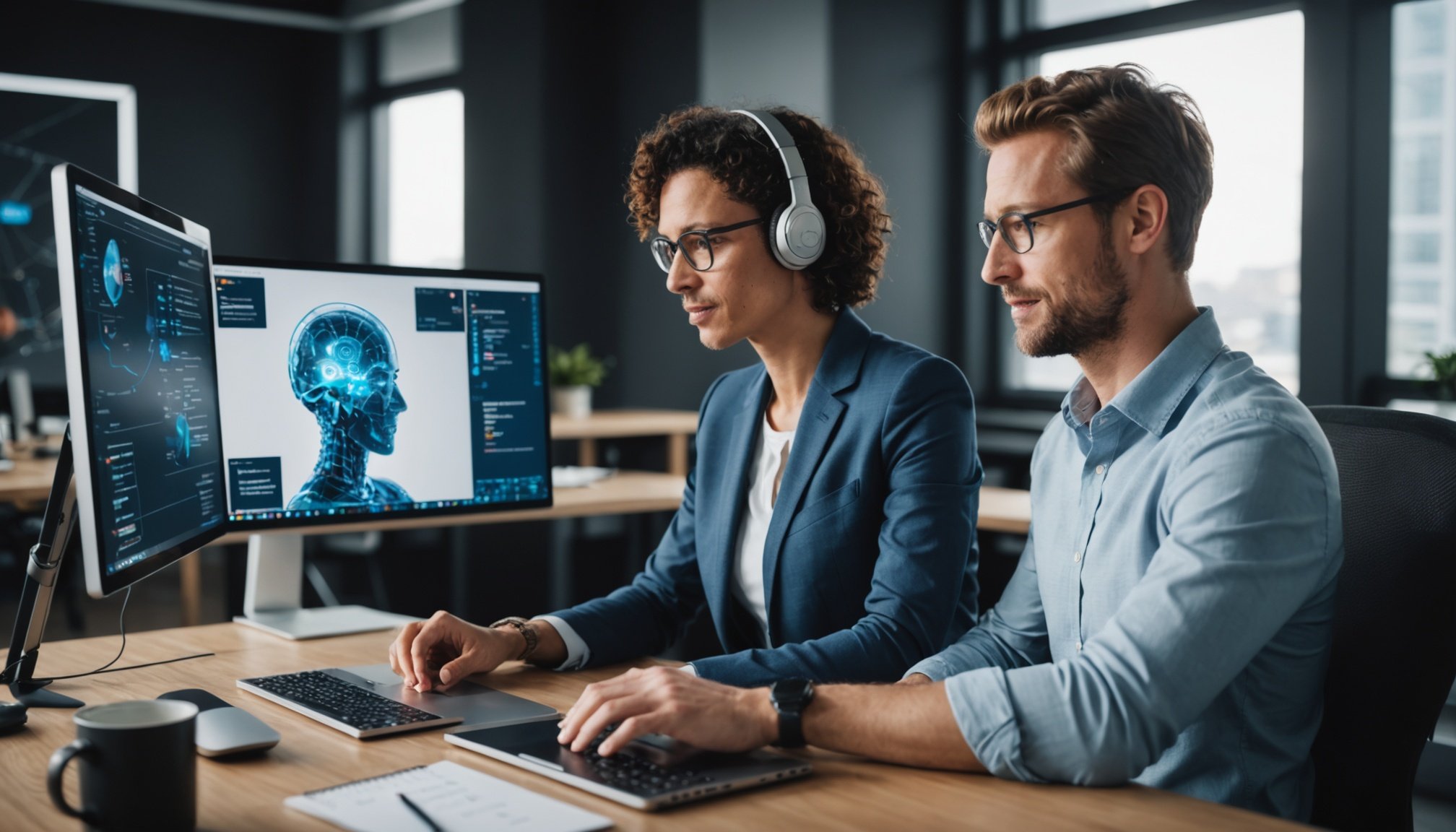
Remote collaboration has become an essential part of modern work culture, accelerated by globalization and the rise of distributed teams. However, managing communication, workflows, and productivity in remote settings can be challenging. Artificial Intelligence (AI) is increasingly stepping in to address these challenges, offering tools that streamline collaboration, enhance efficiency, and optimize team performance. From AI-powered virtual assistants to predictive analytics, these technologies allow teams to work smarter rather than harder.This article explores how AI is transforming remote collaboration, focusing on communication tools, project management, knowledge sharing, security, productivity, and future trends. By understanding AI’s role, organizations can harness its potential to enhance team efficiency, engagement, and overall performance in the digital workplace.
Understanding AI in Remote Collaboration
AI in remote collaboration refers to intelligent technologies that enhance communication, workflow, and productivity for distributed teams. Unlike traditional collaboration tools, which simply facilitate meetings or document sharing, AI systems actively analyze patterns, suggest improvements, and automate repetitive tasks. Key AI features include virtual assistants that schedule meetings, chatbots that answer queries, predictive analytics for resource allocation, and automated transcription for meetings. These tools reduce manual effort, optimize team coordination, and provide actionable insights.
AI can also interpret communication sentiment, track task completion, and recommend strategies to improve efficiency. By integrating AI, organizations can bridge gaps between remote employees, ensuring collaboration remains seamless and productive. The combination of automation, data-driven decision-making, and predictive insights allows teams to focus on high-value tasks rather than administrative burdens. Understanding AI’s functionality in collaboration tools is crucial for maximizing its impact on workforce productivity.
AI-Powered Communication Tools
Effective communication is the backbone of remote collaboration, and AI-powered tools are revolutionizing how teams interact. AI chatbots handle routine queries, freeing team members to focus on more complex tasks. Virtual meeting assistants can schedule meetings, provide agenda suggestions, and automatically transcribe discussions for accurate record-keeping. AI also enables real-time language translation, allowing global teams to communicate effortlessly across language barriers. Sentiment analysis tools monitor communication patterns, helping managers identify potential conflicts or engagement issues before they escalate.
Additionally, AI can summarize lengthy emails or documents, saving time and improving clarity. By providing context-aware recommendations, AI ensures messages are delivered more effectively and understood across teams. These innovations streamline communication, reduce misinterpretation, and enhance responsiveness. For remote teams, AI-powered communication tools not only improve efficiency but also foster collaboration, inclusivity, and a more connected work environment across time zones and geographic locations.
Enhancing Team Productivity with AI
AI significantly enhances team productivity by automating repetitive tasks, optimizing workflows, and providing actionable insights. Intelligent task management platforms can prioritize assignments based on urgency, deadlines, and team workload, ensuring resources are allocated efficiently. AI-driven reminders and notifications keep employees on track without constant manual oversight. Predictive analytics analyze project data, highlighting potential bottlenecks and recommending solutions before delays occur. AI can also assess individual performance trends, helping managers identify strengths and areas needing support.
Tools for time tracking, workflow automation, and collaboration provide real-time visibility into team progress, enabling better coordination and faster decision-making. By reducing manual effort and minimizing errors, AI allows team members to focus on high-value, creative, or strategic tasks. The result is a more productive, engaged workforce capable of meeting project goals, improving efficiency, and achieving better outcomes across distributed teams.
AI in Project Management
AI is transforming project management by providing predictive insights, automating routine processes, and enhancing decision-making. Predictive analytics allow managers to forecast project timelines, resource needs, and potential risks, helping prevent delays or cost overruns. AI-driven platforms can automatically assign tasks, track progress, and generate performance reports in real-time, providing a comprehensive overview of team activities. Machine learning algorithms identify patterns in project data, suggesting workflow optimizations and identifying dependencies that may impact delivery.
AI also improves accountability by monitoring task completion and sending intelligent reminders to ensure deadlines are met. Risk management tools analyze historical and current data to highlight potential project pitfalls, allowing proactive intervention. By integrating AI into project management, organizations can reduce human error, improve efficiency, and streamline collaboration across departments. Ultimately, AI ensures projects are delivered on time, within budget, and with higher overall quality.
AI for Knowledge Management
Effective knowledge management is critical for remote teams, and AI tools are revolutionizing how information is organized, accessed, and shared. AI can automatically categorize documents, emails, and project files, making it easier for team members to locate relevant resources quickly. Content recommendation engines suggest articles, templates, or tools based on user activity, ensuring employees have the information they need to work efficiently. AI-driven search functions understand natural language queries and provide context-aware results, reducing time spent manually searching for data.
Additionally, AI can monitor document usage patterns, highlighting knowledge gaps or outdated materials, and recommending updates. Collaborative platforms integrate AI to facilitate real-time editing, version control, and secure sharing across teams. By streamlining knowledge management, AI enhances information accessibility, reduces duplication, and ensures that critical organizational knowledge is effectively utilized. Teams can work smarter, make informed decisions, and maintain continuity despite remote operations.
Security and Privacy in AI-Powered Collaboration
Security and privacy are paramount in AI-powered remote collaboration tools. AI systems monitor access patterns, detect unusual behavior, and identify potential threats in real-time, helping prevent data breaches. Machine learning algorithms analyze network activity to flag suspicious logins, unauthorized file access, or phishing attempts. AI can also enforce secure access policies, manage encryption, and monitor compliance with data protection regulations like GDPR or CCPA. For sensitive projects, AI ensures that only authorized personnel access critical information, minimizing risks in distributed teams.
While AI enhances security, it must be implemented responsibly, balancing productivity gains with privacy protections. Companies need to maintain transparency about data collection and usage, ensuring employee trust. By integrating AI-driven security measures, organizations can safeguard collaboration platforms, protect intellectual property, and maintain compliance, all while supporting efficient and uninterrupted remote work.
Benefits of AI in Remote Collaboration
AI offers multiple benefits for remote collaboration, making distributed teams more efficient, connected, and productive. By automating routine tasks such as scheduling, reporting, and document organization, AI frees employees to focus on high-value activities. Communication is enhanced through real-time language translation, sentiment analysis, and automated transcription, improving clarity and reducing misunderstandings. AI also provides data-driven insights into team performance, workflow optimization, and resource allocation, allowing managers to make informed decisions.
Predictive analytics and intelligent recommendations help prevent bottlenecks, mitigate risks, and prioritize tasks effectively. Additionally, AI facilitates knowledge sharing and collaboration across locations, making information accessible and actionable. Overall, AI strengthens engagement, accountability, and decision-making within remote teams. Businesses leveraging AI for collaboration can achieve higher productivity, better project outcomes, and more satisfied employees, making it an essential tool for the future of distributed work.
Challenges and Limitations
Despite its advantages, AI adoption in remote collaboration presents challenges. Employee resistance is common, as some workers fear AI may replace human roles or reduce autonomy. Integration with existing tools and workflows can be complex, requiring training and change management. AI systems may occasionally provide inaccurate suggestions due to biased or incomplete data, leading to potential errors. Over-reliance on AI can diminish human creativity, critical thinking, and interpersonal skills, which remain vital for collaboration. Privacy concerns arise when AI analyzes communication or monitors employee behavior.
Additionally, implementing AI solutions can be costly, particularly for small businesses. To overcome these limitations, organizations must combine AI with human oversight, provide training, and establish transparent policies on data usage. By addressing these challenges thoughtfully, companies can maximize AI’s benefits while minimizing risks to team performance and trust.
Future Trends in AI and Remote Work
The future of AI in remote collaboration promises smarter, more adaptive, and immersive technologies. Emerging tools integrate AI with virtual and augmented reality (VR/AR) to create interactive, shared virtual workspaces. Predictive analytics will help managers allocate resources, forecast project outcomes, and identify skills gaps before issues arise. AI will further streamline workflows, automate decision-making, and provide personalized recommendations for employees.
Integration with wearable devices and IoT platforms may enhance team monitoring, engagement, and productivity tracking. Hybrid work models will benefit from AI-driven tools that seamlessly connect remote and in-office teams, ensuring equitable collaboration. As AI continues to evolve, its role in enhancing communication, knowledge sharing, and productivity will expand. Organizations that adopt and prepare for these innovations will gain a competitive advantage, while employees will experience more efficient, flexible, and engaging remote work environments.
Conclusion
AI is reshaping the future of remote collaboration by automating tasks, optimizing workflows, and enhancing communication across distributed teams. From AI chatbots and virtual assistants to predictive analytics and smart knowledge management, these technologies enable employees to focus on high-value, strategic work. While challenges like employee adaptation, data privacy, and integration exist, responsible AI adoption offers measurable productivity gains and improved collaboration. By combining human judgment with AI capabilities, organizations can enhance decision-making, engagement, and overall team efficiency.
FAQs
How is AI improving remote collaboration for teams?
AI enhances remote collaboration by automating routine tasks, improving communication through real-time translation, summarizing meetings, and enabling smarter project management tools that boost productivity and teamwork.
What AI tools are commonly used for remote collaboration?
Popular AI-powered collaboration tools include AI meeting assistants, smart chatbots, automated task managers, real-time transcription tools, and AI-driven video conferencing platforms.
Will AI replace human interaction in remote work?
No, AI is designed to support and enhance human collaboration, not replace it. It helps teams work more efficiently by reducing manual work and improving communication, while human creativity and decision-making remain essential.


