


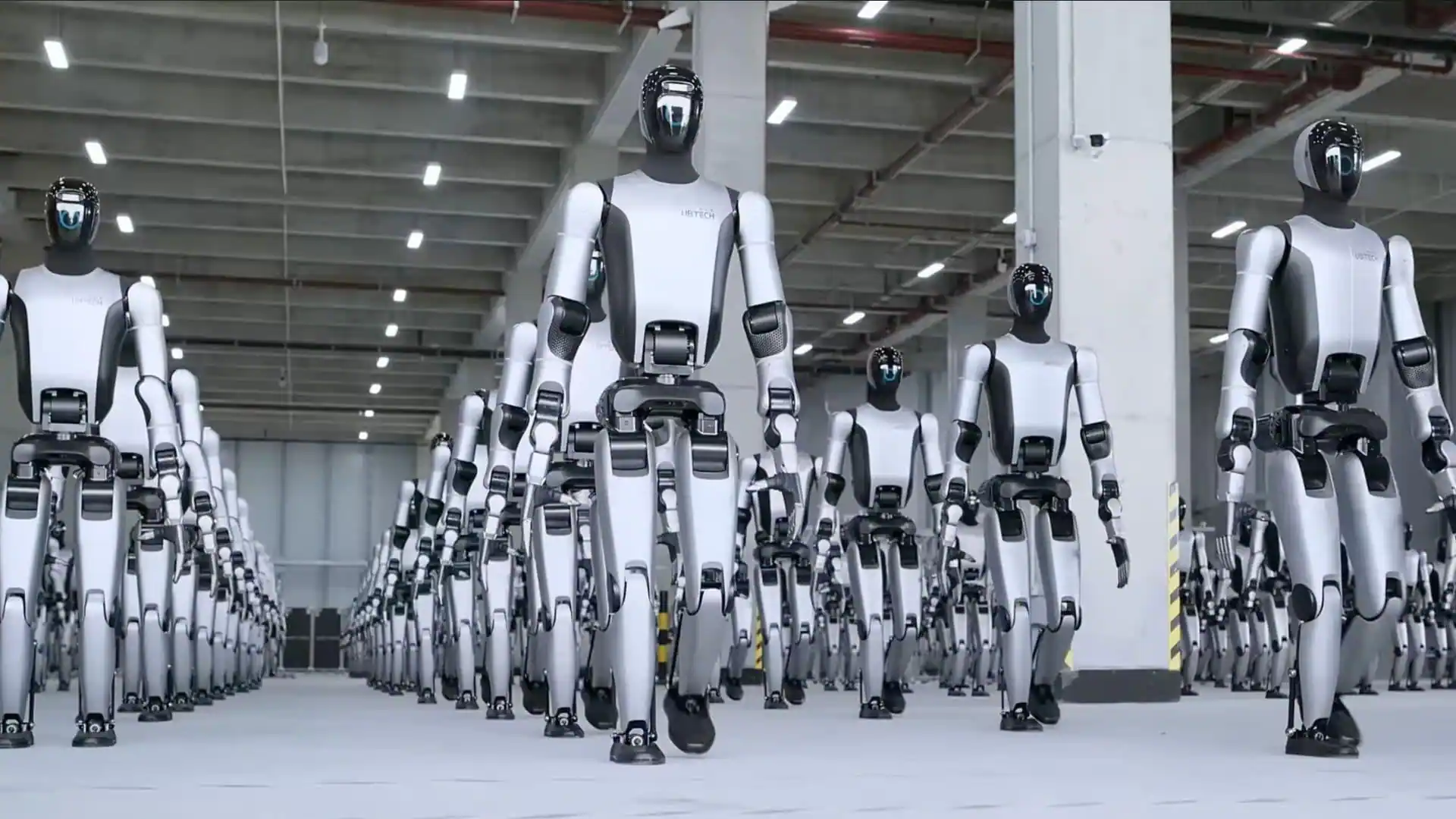
China has recently deployed UBTech’s humanoid robots, specifically the Walker S2 model, to patrol border crossings between China and Vietnam. This initiative marks a significant step in applying advanced robotics to public service and security operations. The robots are designed to assist human staff by conducting inspections, providing guidance, and performing logistical tasks at busy checkpoints. With increased cross-border trade and passenger flow, the deployment of humanoid robots aims to enhance operational efficiency and reduce human workload. In this article, we examine the technical features of the Walker S2 robots, their deployment at border crossings, potential benefits, challenges, and implications for the future of robotics.
What Are Walker S2 Humanoid Robots?
The Walker S2 is a state-of-the-art humanoid robot developed by UBTech Robotics, featuring advanced mobility, autonomous navigation, and interactive capabilities. Unlike stationary robots, Walker S2 can walk, climb stairs, and maneuver in complex environments, making it ideal for real-world applications like border patrols. Equipped with a wide range of sensors, cameras, and LiDAR technology, it can detect obstacles, track movements, and interact safely with humans. The robot also supports battery swapping, enabling continuous operation without frequent downtime.
Its AI-driven control system allows it to perform tasks autonomously while adapting to environmental changes. In addition to physical tasks, Walker S2 can provide information and guidance to individuals, answer routine questions, and assist with monitoring activities. This combination of mobility, AI intelligence, and human-like interaction distinguishes the Walker S2 from simpler service robots, making it suitable for public service, security, and logistical applications. By deploying such robots at sensitive locations, organizations can enhance efficiency, reduce human risk, and test advanced robotics in practical settings.
Details of the Border Patrol Deployment
The deployment of Walker S2 humanoid robots focuses on the Fangchenggang region in Guangxi, near the China-Vietnam border. These robots are tasked with patrolling checkpoints, guiding travelers, inspecting vehicles, and assisting human officers with routine tasks. UBTech Robotics secured a contract valued at approximately $3.1 million to supply the robots, with delivery and operational integration scheduled throughout 2025 and 2026. The robots operate autonomously but can also be remotely monitored and controlled if needed. By covering repetitive or physically demanding tasks, Walker S2 robots allow human personnel to focus on more strategic and complex duties.
The deployment demonstrates a combination of AI, robotics, and sensor technologies applied to real-world security scenarios. This initiative also acts as a pilot program, evaluating the robots’ performance in diverse conditions, including outdoor environments and crowded public spaces. The data collected from this deployment will likely inform future robotics applications in public safety, logistics, and infrastructure management.
How the Robots Work in Real-World Scenarios
Walker S2 robots utilize autonomous navigation, AI-driven decision-making, and advanced sensor systems to operate effectively in real-world environments. They can patrol border checkpoints, detect obstacles, monitor crowd movement, and interact with individuals to provide guidance or instructions. Their mobility allows them to navigate stairs, uneven terrain, and narrow pathways, ensuring coverage of diverse operational areas. The robots continuously process data from their sensors to make real-time adjustments, avoiding collisions and responding to unexpected situations.
They can also log inspection results, report anomalies, and send alerts to human supervisors. These capabilities make Walker S2 an effective assistant for border patrol officers, reducing repetitive tasks and enhancing situational awareness. The robots’ durability and battery-swapping system allow them to work continuously for extended periods. This real-world deployment tests not only the technical capabilities of the robots but also their adaptability, reliability, and interaction with humans in public spaces.
Strategic Importance of the Deployment
Deploying humanoid robots at border crossings serves multiple strategic purposes. For China, it demonstrates the practical integration of AI and robotics into public service, aligning with national policies promoting technological innovation. Border security is a sensitive area, and using robots reduces human exposure to risk while improving operational efficiency. The project also acts as a high-profile showcase of UBTech’s technological capabilities, strengthening China’s position as a leader in humanoid robotics.
Additionally, data collected from the deployment helps refine AI algorithms, improve robot performance, and guide future implementations in other public sectors. Beyond security, the robots support logistics, crowd management, and public guidance, offering a versatile solution to complex operational challenges. This deployment signals a broader trend in using humanoid robots for public infrastructure, setting a precedent for international adoption and influencing global robotics development.
Benefits of Using Humanoid Robots at Borders
Humanoid robots offer multiple benefits for border operations. They can work continuously without fatigue, handling repetitive tasks like vehicle inspection, crowd monitoring, and guiding travelers. Their autonomous operation reduces human workload and allows officers to focus on more strategic duties. The robots’ ability to collect and transmit real-time data improves operational decision-making and situational awareness. They also enhance safety by reducing direct human contact in high-risk environments.
For travelers, interacting with a humanoid robot can streamline processes, provide accurate information, and reduce wait times. Moreover, these robots contribute to cost efficiency over time by minimizing labor-intensive tasks. By integrating robots into border security, authorities can achieve a balance between operational efficiency, safety, and public service quality.
Concerns and Challenges
Despite the benefits, deploying humanoid robots at borders poses several challenges. Performance reliability in harsh weather, uneven terrain, and crowded conditions is critical for effective operation. Maintenance, technical issues, and battery management require dedicated support systems. Privacy concerns may arise if robots collect personal or surveillance data, necessitating strict data protection measures. Public perception is another factor; travelers may feel uneasy interacting with robots, affecting adoption and trust. Additionally, initial costs of procurement and integration are substantial.
Ethical considerations, such as potential replacement of human workers, must be addressed. Ensuring that robots complement rather than replace human staff is crucial for successful deployment. These challenges highlight the need for careful planning, continuous monitoring, and public communication to maximize benefits while minimizing risks.
Expert and Public Reactions
Industry experts view UBTech’s deployment as a significant milestone in humanoid robotics. Analysts praise the Walker S2’s mobility, AI integration, and adaptability to complex public environments. Some experts note that real-world deployment provides invaluable data for improving AI decision-making and operational performance. Public reactions are mixed; while many recognize the efficiency and innovation benefits, others express concerns about privacy, job displacement, and safety.
International observers are also interested, considering the implications for robotics adoption in security and public service worldwide. Overall, the initiative generates excitement in the robotics community, with discussions focusing on scalability, cost-effectiveness, and potential applications beyond border control.
What This Means for the Future of Robotics
The deployment of humanoid robots at the China-Vietnam border reflects a broader trend of integrating AI and robotics into public infrastructure. Real-world applications demonstrate how robots can assist humans, improve efficiency, and enhance safety. Lessons learned from this deployment will inform future innovations in healthcare, logistics, security, and urban management.
As robots gain autonomy, mobility, and interactive capabilities, their use will likely expand globally, influencing standards for public service automation. This initiative showcases the potential of humanoid robots to handle complex tasks in dynamic environments, bridging the gap between research prototypes and practical applications. It represents a milestone in the evolution of robotics toward mainstream adoption.
Conclusion
UBTech’s humanoid robots patrolling the China-Vietnam border represent a major technological milestone in public service automation. The Walker S2 robots enhance operational efficiency, support human staff, and demonstrate the potential for real-world humanoid robotics applications. While challenges like maintenance, public perception, and privacy exist, the benefits in safety, efficiency, and data collection are significant. This deployment signals a transformative moment in robotics, offering insights that will shape future implementations in security, logistics, and public infrastructure worldwide.
FAQs
Will these robots replace human border agents?
No, they complement human staff by handling repetitive tasks and assisting with inspections.
How long can Walker S2 robots operate continuously?
Battery-swapping systems allow them to work for extended periods with minimal downtime.
Are there privacy concerns with humanoid robots?
Yes, proper data protection measures are essential to ensure safe and ethical deployment.