


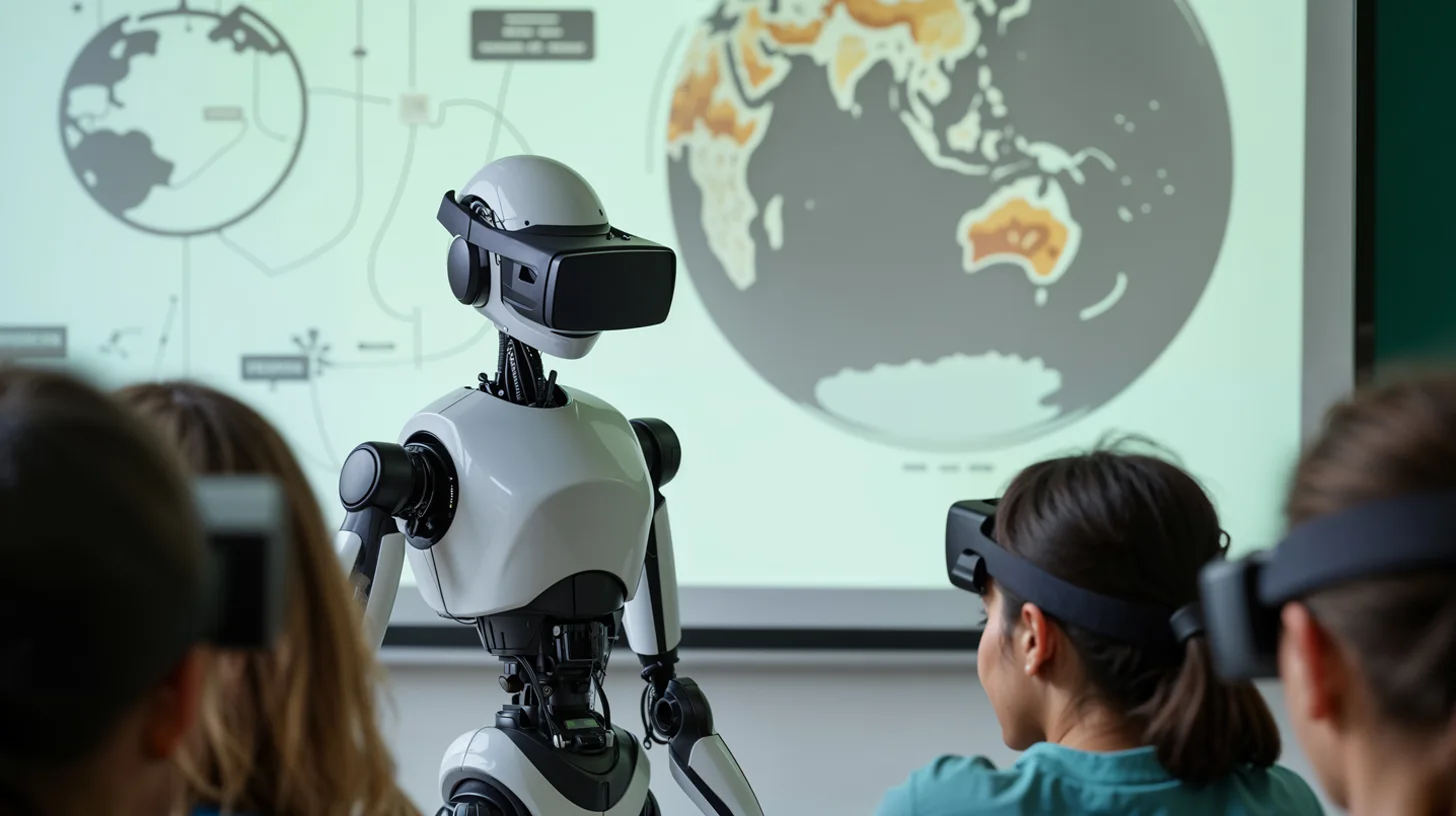
Artificial Intelligence (AI) is rapidly transforming the education landscape, reshaping how students learn, teachers teach, and institutions operate. Traditional classrooms, while still valuable, are increasingly supplemented by AI-driven tools that offer personalized learning experiences, automated assessments, and data-driven insights. AI in education isn’t just about technology—it’s about improving efficiency, engagement, and learning outcomes. From adaptive learning platforms that adjust to each student’s pace to intelligent tutoring systems providing instant support, AI helps create a more responsive and effective learning environment. This article explores the multiple ways AI is revolutionizing education, highlighting its benefits, challenges, and future potential in classrooms and remote learning environments.
What Is AI in Education?
AI in education refers to the use of intelligent systems and algorithms to enhance learning, teaching, and administration. It includes tools like adaptive learning platforms, AI tutors, intelligent assessment systems, and predictive analytics. Unlike traditional educational methods, which rely solely on standardized teaching, AI can personalize content, analyze student performance, and provide real-time feedback. AI systems can process vast amounts of data to identify learning gaps, predict outcomes, and recommend targeted interventions.
This technology bridges the gap between a one-size-fits-all approach and individualized learning, enabling students to progress at their own pace. AI is also integrated into virtual classrooms, online courses, and administrative processes, streamlining tasks like grading and scheduling. In short, AI in education combines technology, data, and analytics to create smarter, more efficient, and more engaging learning experiences for both students and educators.
Personalized Learning Through AI
Personalized learning is one of the most significant benefits of AI in education. AI algorithms analyze a student’s strengths, weaknesses, learning style, and pace to deliver customized lessons and practice exercises. Platforms like adaptive learning software adjust the difficulty of tasks in real-time, ensuring students remain challenged without being overwhelmed. This approach helps increase engagement and knowledge retention by focusing on individual needs rather than a generic curriculum. Personalized learning also allows teachers to identify struggling students early and provide targeted interventions.
In online learning, AI can recommend resources, videos, and exercises tailored to the learner’s progress. By focusing on each student’s unique path, AI promotes efficient learning, boosts confidence, and encourages mastery. Ultimately, personalized AI-driven learning ensures that education is flexible, inclusive, and capable of meeting diverse student needs across various subjects and grade levels.
AI-Powered Tutoring and Support Systems
AI-powered tutoring and support systems are changing the way students access help and guidance. Intelligent virtual tutors and chatbots are available 24/7 to answer questions, explain difficult concepts, and provide additional learning resources. These systems use natural language processing to understand student queries and deliver accurate, personalized responses. AI tutors supplement traditional teaching by offering one-on-one attention that may be unavailable in crowded classrooms.
For example, they can assist with math problem-solving, language practice, or science experiments, providing instant feedback and step-by-step guidance. By automating repetitive explanations, AI tutors free up teachers to focus on more complex educational tasks and mentorship. This technology also enables students to learn at their own pace, promoting independence and self-directed study. With AI support, learners can access tailored guidance anytime, making education more accessible and responsive to individual needs.
Automating Administrative Tasks in Education
AI is also revolutionizing the administrative side of education by automating repetitive tasks that consume teachers’ time. Tools powered by AI can handle grading multiple-choice tests, monitoring attendance, scheduling classes, and even managing administrative communications. By streamlining these processes, educators have more time to focus on interactive teaching, curriculum planning, and mentoring students. AI can analyze data from student performance to provide insights that guide decision-making, such as identifying at-risk students or optimizing resource allocation.
Automation also reduces human errors in grading and record-keeping, ensuring accuracy and consistency. For institutions, AI-driven administration supports efficient operations, cost savings, and improved planning. Overall, automating administrative tasks through AI not only increases productivity but also enhances the overall learning environment, allowing teachers and students to focus on meaningful educational interactions.
AI in Assessments and Feedback
AI is transforming assessments by making them smarter, faster, and more personalized. Intelligent assessment platforms can grade assignments, quizzes, and essays accurately and provide immediate feedback to students. AI analyzes patterns in student responses to highlight strengths, weaknesses, and areas needing improvement. Adaptive testing adjusts the difficulty level of questions in real-time, ensuring assessments are fair and tailored to each learner.
This approach allows teachers to identify learning gaps quickly and adjust lesson plans accordingly. AI-driven feedback goes beyond simple scoring, offering detailed explanations and resources for further learning. Additionally, predictive analytics can forecast student performance, helping educators intervene before problems escalate. By leveraging AI in assessments, schools and online platforms can improve learning outcomes, provide actionable insights, and foster a more engaging, responsive, and data-driven educational experience.
Enhancing Remote and Online Learning With AI
AI has become a critical tool for enhancing remote and online learning, especially as digital classrooms become more common. AI-powered platforms personalize lessons, recommend content, and track progress in real-time. They can analyze engagement metrics such as time spent on tasks, quiz performance, and participation to adapt the learning experience. Gamification features, powered by AI, make remote learning interactive and motivating. AI also helps instructors manage large virtual classes by identifying students who need extra support.
Virtual teaching assistants and AI chatbots provide instant guidance, ensuring learners are not left behind. With AI, online learning becomes more dynamic, interactive, and responsive, bridging the gap between physical classrooms and digital education. This technology ensures that remote students receive personalized attention and support, improving overall learning effectiveness.
AI and Special Education
AI is making education more inclusive by supporting students with learning disabilities or special needs. Tools like speech recognition software, predictive learning paths, and accessibility-focused applications help learners overcome challenges. For example, AI can convert text to speech, provide visual aids, or adjust lessons for cognitive and attention differences. These tools allow educators to deliver tailored instruction and monitor student progress more effectively.
Predictive analytics can also identify areas where students struggle, enabling timely interventions. AI ensures that learning environments are adaptable, providing equal opportunities for all students. By combining technology with personalized instruction, AI empowers students with diverse needs to achieve academic success. Inclusive AI-driven education promotes fairness, engagement, and accessibility, helping every learner reach their full potential.
Challenges and Concerns of AI in Education
While AI offers many benefits, it also comes with challenges. Privacy and data security are major concerns, as AI systems often collect sensitive student information. Over-reliance on AI may reduce human interaction, critical thinking, and problem-solving skills. Bias in AI algorithms can lead to unfair assessments or recommendations, affecting student outcomes. Implementing AI can also be costly for schools and may require teacher training. Additionally, technology access disparities can widen educational inequality if not addressed.
Ethical considerations, such as transparency and accountability in AI-driven decisions, must be prioritized. To maximize benefits while minimizing risks, institutions should combine AI with human oversight, implement strict privacy policies, and ensure equitable access. Addressing these challenges ensures AI enhances education responsibly and inclusively.
Future of AI in Education and Learning
The future of AI in education is focused on predictive, immersive, and fully personalized learning experiences. Emerging technologies, including AI-powered virtual reality and augmented reality, will create interactive simulations and practical learning environments. Predictive learning analytics will anticipate student needs and recommend interventions before issues arise. Cross-platform AI integration will provide seamless access to lessons, resources, and assessments across devices.
AI will also assist educators in curriculum design, professional development, and performance monitoring. The emphasis will be on combining human guidance with intelligent systems to create adaptive, engaging, and efficient learning environments. As AI evolves, education will become more accessible, equitable, and effective, preparing students for a rapidly changing digital world and equipping educators with tools to enhance teaching and learning outcomes.
Conclusion
AI is revolutionizing education by creating personalized, efficient, and interactive learning experiences. From intelligent tutoring systems and adaptive assessments to automated administrative tools, AI supports both students and educators. While challenges like privacy, bias, and over-dependence exist, responsible use of AI can transform classrooms and online learning environments. The combination of human guidance and AI technology allows for improved engagement, better outcomes, and inclusive education for all. Staying informed about AI applications in education ensures that students benefit from modern learning tools while educators optimize teaching strategies.
FAQs
How is AI transforming education and learning?
AI is transforming education by enabling personalized learning, automating administrative tasks, providing intelligent tutoring systems, and offering real-time feedback that improves student engagement and learning outcomes.
What are the benefits of using AI in education?
AI helps students learn at their own pace, supports teachers with grading and lesson planning, improves accessibility for learners with disabilities, and enhances overall efficiency in educational institutions.
Are there any risks or challenges of AI in education?
Yes, challenges include data privacy concerns, potential bias in AI algorithms, high implementation costs, and the need for proper training to ensure educators and students use AI responsibly and effectively.